
Beard Guide Tool: A Comprehensive Overview (Updated 03/08/2026)
Beard shaping tools, like templates and guides, offer 46 diverse options for styling, ensuring precision and a polished look for every beard enthusiast.
What is a Beard Guide Tool?
Beard guide tools are instruments designed to assist men in achieving perfectly shaped and symmetrical facial hair. These tools range from simple templates and lineup guides to more advanced rotatable styling tools. Essentially, they act as a stencil, providing a clear visual boundary for trimming and shaping the beard.
They are particularly useful for those new to beard grooming or those struggling to create clean lines. A beard shaper, often including a built-in comb and pencil, simplifies the process, ensuring a professional finish. These tools cater to diverse tastes, offering numerous beard style options for customization.
The Purpose of Using a Beard Shaping Tool
Beard shaping tools serve the primary purpose of achieving a clean, defined, and symmetrical beard style. They eliminate guesswork and reduce the risk of uneven trimming, leading to a more polished and professional appearance. These tools are invaluable for creating sharp lines, particularly along the neckline and cheek line.
Beyond aesthetics, using a beard guide promotes confidence and self-presentation. Whether aiming for a short boxed beard, a full beard, or a more intricate style like a Van Dyke, these tools provide the necessary precision. They are especially helpful for individuals seeking consistent results with each grooming session.

Types of Beard Guide Tools Available
Beard guides come in varied forms: shaping templates, lineup guides, stencils, and rotatable styling tools, each offering unique precision for diverse beard styles.
Beard Shaping Templates
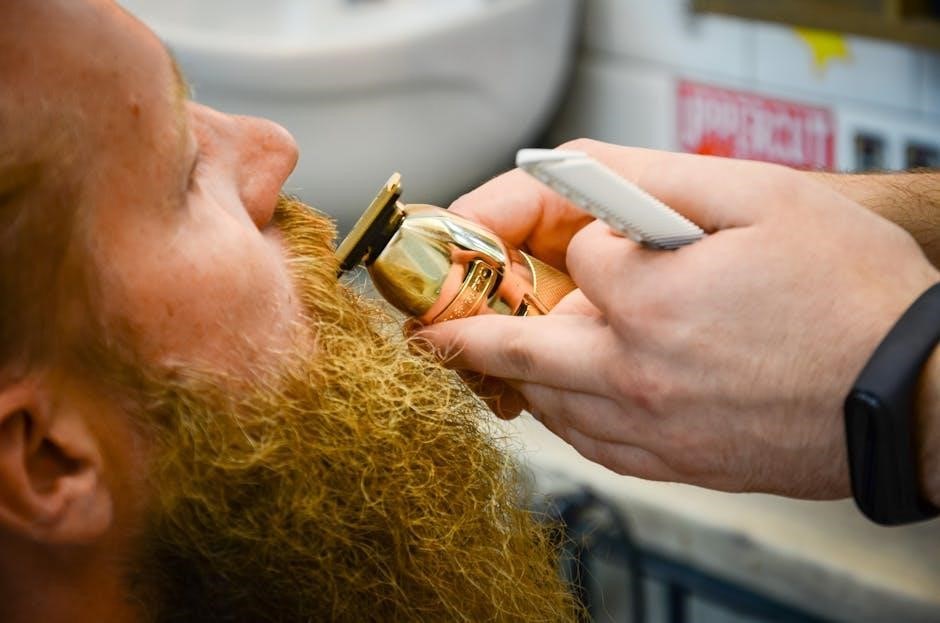
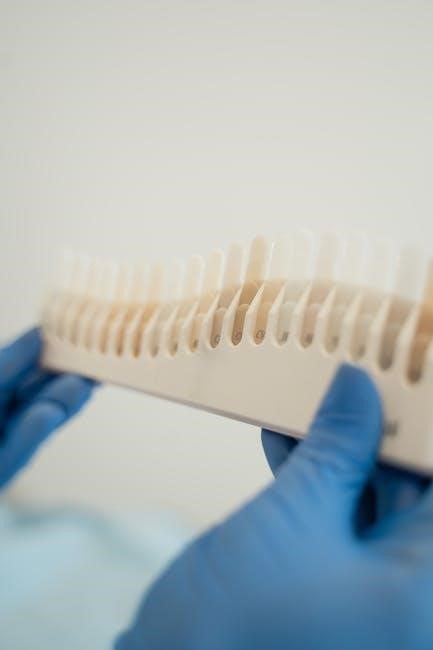
Beard shaping templates are plastic or metal guides designed to assist in achieving symmetrical and well-defined beard lines. These tools typically feature pre-cut shapes representing various beard styles, or simply straight edges for creating custom lines.
Users position the template against their face and use a trimmer to remove stray hairs outside the desired shape. They are particularly useful for beginners or those seeking consistent results. The templates offer a quick and easy method for outlining the beard, ensuring a professional finish. Different templates cater to different face shapes and desired beard lengths, providing versatility in styling options.
Beard Lineup Guides
Beard lineup guides, often incorporating a built-in comb, are specifically designed for creating sharp and clean lines along the jawline and neckline. These tools typically feature an angled edge that acts as a stencil, allowing for precise trimming with a razor or trimmer.
Many guides include a pencil for pre-lining the desired shape, enhancing accuracy. They are ideal for achieving a polished and professional look, particularly for styles requiring defined edges. These guides are favored for their simplicity and effectiveness in creating a crisp, well-maintained beard appearance, offering a streamlined approach to grooming.
Beard Stencils
Beard stencils represent a versatile approach to shaping, offering a range of pre-designed styles or allowing for custom creations. These templates, often made from flexible plastic, are positioned over the beard and used as a guide for trimming.
They cater to diverse tastes, from subtle enhancements to dramatic transformations, providing options for various beard lengths and shapes. Stencils are particularly useful for individuals experimenting with new styles or seeking consistent results. They offer a convenient and accessible method for achieving a professionally sculpted beard, even without prior grooming experience.
Rotatable Styling Tools
Rotatable styling tools offer a dynamic approach to beard shaping, allowing for precise adjustments and versatile styling options. These tools typically feature a rotating template that can be angled to achieve different beard lines and contours.
They are particularly beneficial for creating symmetrical shapes and refining edges, catering to a variety of beard styles. The rotating mechanism enables users to easily adapt the tool to their unique facial features and desired aesthetic. Investing in such a tool provides a convenient and effective solution for maintaining a well-groomed and stylish beard.

Essential Beard Grooming Tools to Complement the Guide
Combs, brushes, oils, balms, and scissors are vital for maintaining a healthy, styled beard alongside a shaping guide, enhancing overall grooming.
Beard Combs
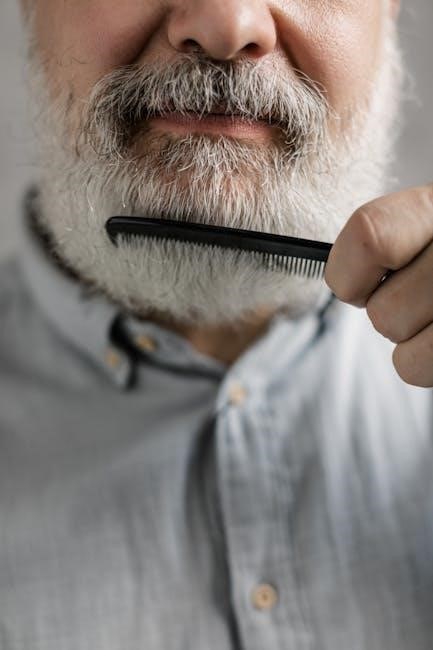
Beard combs are fundamental tools, essential for detangling, exfoliating the skin underneath, and distributing beard oil or balm evenly throughout the facial hair; Unlike regular hair combs, beard combs typically feature wider teeth designed to navigate thicker, coarser beard hair without causing breakage or discomfort.
Using a comb regularly helps train the beard hair to grow in a desired direction, complementing the precision achieved with a shaping guide. Different materials, like wood (sandlewood is popular) or plastic, offer varying benefits; wood is gentle and reduces static, while plastic is durable and easy to clean; A quality comb is a small investment that significantly improves beard health and style.
Beard Brushes
Beard brushes, often crafted with boar bristles, are crucial for exfoliating the skin, removing dead skin cells, and stimulating blood flow to the hair follicles – promoting healthier beard growth. They also effectively distribute beard oil and balm, ensuring even conditioning from root to tip.
Unlike combs that focus on detangling, brushes help to shape and style the beard, working in harmony with a beard guide to refine the lines and overall appearance. Regular brushing can also help train the beard hair, making it more manageable and less prone to frizz. Choosing a brush with natural bristles offers a gentler experience for both the beard and the skin.
Beard Oil
Beard oil is a cornerstone of any grooming routine, working synergistically with a beard guide to achieve a well-maintained and healthy facial hairstyle. It primarily hydrates the skin beneath the beard, preventing dryness, itchiness, and “beardruff”. Quality oils contain carrier oils like jojoba or argan, mimicking the skin’s natural sebum.
Applying beard oil after using a shaping tool softens the hair, making it easier to style and manage. It also adds a subtle sheen, enhancing the overall appearance. Consistent use promotes a softer, fuller beard and contributes to a more refined look, complementing the precision offered by a beard guide.
Beard Balm
Beard balm provides both conditioning and styling benefits, acting as a fantastic follow-up to using a beard guide tool. Unlike oil, balm contains butters – often shea or cocoa – and waxes, offering a light to medium hold. This allows you to shape and control stray hairs, reinforcing the lines created with the guide.
Balm not only tames the beard but also moisturizes the skin and hair, preventing dryness and promoting a healthy, groomed appearance. It’s particularly useful for longer beards needing more control. Applying balm after shaping with a guide ensures the style holds throughout the day, maintaining a polished finish.
Trimming Scissors
Trimming scissors are essential for refining the shape achieved with a beard guide tool, offering precision beyond what a trimmer can provide. They’re ideal for tidying up stray hairs, defining edges, and creating clean lines, especially around the mustache and neckline. Investing in a quality pair with sharp blades is crucial for a clean cut and preventing split ends.
After using a guide to establish the initial form, scissors allow for detailed adjustments. They’re perfect for removing individual hairs that fall outside the desired shape, ensuring a polished and professional finish. Regular trimming with scissors maintains the style and prevents an unkempt appearance.

Popular Beard Styles for Different Face Shapes
Utilizing a beard guide helps achieve styles complementing face shapes – round, square, oval, or rectangular – for a balanced and aesthetically pleasing appearance.
Beard Styles for Round Faces
For round faces, the goal is to add length and definition. A beard guide is invaluable in achieving this. Styles like the Van Dyke, with its pointed beard and mustache, create sharp angles. Similarly, a goatee, carefully shaped with a guide, elongates the face.
The short boxed beard, maintained with precision using a shaping tool, adds structure without adding excessive width. Avoid full, bushy beards that can exaggerate roundness. A beard guide ensures clean lines, preventing a shapeless appearance. Regularly refining the shape with the guide maintains the desired angularity, enhancing facial contours and creating a more sculpted look.
Beard Styles for Square Faces
Square faces benefit from beards that soften strong jawlines. A beard guide assists in creating these softening effects. Styles like a full beard, meticulously shaped with a guide, can round out the face’s angles. The Balbo style, utilizing a trimmed mustache and soul patch, offers a balanced look, easily achieved with precise guide application.
Avoid overly sharp or angular beard styles that accentuate the squareness. A beard guide ensures a softer, more rounded shape. Regular trimming, guided by the tool, prevents harsh lines. Maintaining length on the chin helps visually lengthen the face, creating a harmonious proportion and a more approachable appearance.
Beard Styles for Oval Faces
Oval faces are incredibly versatile, suiting almost any beard style. A beard guide is invaluable for achieving precision, regardless of the chosen look. The short boxed beard, easily shaped with a guide, offers a clean, modern aesthetic. A full beard, maintained with a guide’s assistance, adds fullness without overwhelming the face’s natural balance.
Experimentation is encouraged! Utilize a guide to explore various lengths and shapes. The Van Dyke, with its pointed beard and mustache, can be elegantly defined using a shaping tool. Avoid styles that drastically alter the face’s natural proportions; the goal is enhancement, not disguise;
Beard Styles for Rectangular Faces
Rectangular faces benefit from beards that add width and soften angular features. A beard guide is crucial for achieving symmetrical fullness. The full beard, meticulously shaped with a guide, creates a balanced appearance, minimizing length. A shorter, rounded beard, defined by a shaping tool, adds volume to the cheeks.
Avoid overly long or sharply angled styles that accentuate the face’s length. The Balbo, carefully sculpted with a guide, offers a sophisticated look. Maintaining a well-groomed appearance is key; regular trimming with guide assistance prevents an unbalanced silhouette.
Beard Styles Trending in 2025-2026
In 2025-2026, the short boxed beard, full beard, goatee, Van Dyke, and Balbo styles are popular, all benefiting from precise shaping with a beard guide.
The Short Boxed Beard
The short boxed beard, a consistently popular choice, demands sharp lines and a well-defined shape – making a beard guide tool invaluable. This style features a neatly trimmed beard, closely cropped and squared off at the bottom and sides. Achieving this precision without a guide can be challenging, often resulting in unevenness.
A beard shaping template ensures symmetrical lines, simplifying the trimming process. Utilizing a beard lineup guide helps create clean edges along the cheeks and neckline. The tool’s built-in comb aids in even distribution of beard oil or balm, enhancing the overall groomed appearance. For those new to beard styling, or seeking consistent results, a beard guide is essential for mastering this classic look.
The Full Beard
The full beard, a symbol of masculinity and often requiring significant growth, benefits from a beard guide tool for initial shaping and maintenance. While seemingly less reliant on precise lines than shorter styles, a guide ensures symmetry and prevents an unkempt appearance. Establishing a clear neckline and cheek line is crucial, and a beard shaping template assists in achieving this.
Even with a fuller style, maintaining a defined shape prevents it from becoming shapeless. A beard lineup guide can subtly refine the lower edges, while regular trimming with scissors, guided by the template, keeps it looking polished. Consistent use of a guide promotes even growth and a balanced, aesthetically pleasing beard.
The Goatee
Goatees, known for their versatility and defined chin focus, greatly benefit from the precision offered by a beard guide tool. Achieving a symmetrical and well-defined shape is paramount, and a beard stencil or lineup guide proves invaluable. These tools help establish clean lines along the jawline and around the mouth, preventing a messy or uneven appearance.
Using a beard shaping template allows for experimentation with different goatee variations – rounded, pointed, or extended. Regular trimming, guided by the tool, maintains the desired shape and prevents stray hairs. A beard guide ensures a polished look, enhancing the goatee’s impact and complementing facial features effectively.
The Van Dyke
The Van Dyke, a sophisticated style featuring a pointed beard combined with a mustache, demands precision. A beard guide tool, specifically a lineup guide, is crucial for achieving the sharp, defined lines characteristic of this look. It ensures symmetry between the mustache and beard, preventing an unbalanced appearance.
Templates assist in shaping the pointed beard, while the guide helps maintain a clean separation from the cheeks and neck. Consistent use of the tool during trimming keeps the Van Dyke’s distinct shape intact. Mastering this style requires attention to detail, and a beard guide simplifies the process, delivering a refined and classic aesthetic.
The Balbo
The Balbo, a stylish beard featuring a trimmed beard without sideburns and a floating mustache, benefits greatly from a beard guide tool. Achieving the precise lines defining the Balbo requires careful shaping, and templates are invaluable for establishing the desired width and length of the beard.
Lineup guides ensure a clean separation from the cheeks, creating the signature floating effect. Rotatable styling tools aid in achieving the angled edges. Regular use of the guide during maintenance trims preserves the Balbo’s distinct form, offering a sophisticated and modern look. Precision is key, and a beard guide delivers consistent results.
Beard Styling for Bald Men
Beard guides help balance proportions for bald men, offering 18 trending styles and ensuring a harmonious look with facial hair.
Beard Styles to Complement a Bald Head
Utilizing a beard guide tool is crucial when selecting a style to complement a bald head, as balance is key. A fuller beard, like the Full Beard, can soften the strong jawline often associated with baldness, creating a more proportional appearance. Conversely, a shorter, well-defined style, achievable with a shaping template, can add structure.
The Van Dyke or Balbo, when precisely shaped with a lineup guide, offers sophistication. Remember, the goal is to draw attention to positive features and create visual harmony. Experimenting with different lengths and shapes, guided by the tool, allows for personalized style discovery. A beard guide ensures symmetry and a polished finish, enhancing overall confidence.
Creating Balance with Facial Hair
A beard guide tool is instrumental in achieving facial balance, particularly when addressing perceived imbalances in face shape. For instance, a round face benefits from styles that add length, easily defined using a shaping template. Conversely, a longer face can be softened with fuller beards, meticulously crafted with a guide’s assistance.
Lineup guides are vital for defining jawlines and cheekbones, creating a more sculpted appearance. Utilizing stencils ensures symmetry, a cornerstone of balanced aesthetics. Remember, the ideal beard style isn’t about following trends, but about harmonizing with your unique features, a process greatly aided by precise shaping tools.
Using a Beard Guide Tool: A Step-by-Step Guide
Begin with a clean, dry beard of desired length, apply the guide carefully, and trim slowly for optimal results, refining the shape as needed.
Preparation: Beard Length and Cleanliness
Before utilizing a beard guide tool, proper preparation is absolutely crucial for achieving a clean and defined shape. Start with a beard that has reached your desired length – attempting to shape a beard that is too short will limit your options and potentially lead to uneven results.
Ensure your facial hair is thoroughly clean and dry. Washing your beard removes oils and debris, allowing the guide to adhere properly and providing a smoother trimming experience. A damp beard can clump and stick to the tool, resulting in inaccurate lines.
Combing through your beard is also essential; this straightens the hairs and reveals their natural growth pattern, further enhancing the precision of the shaping process.
Applying the Guide and Trimming
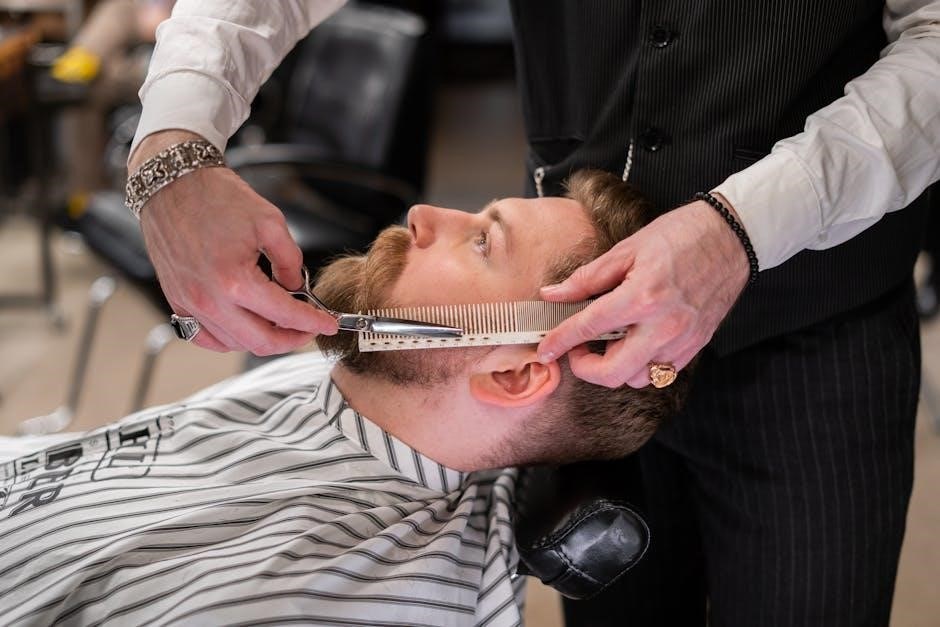
Once your beard is prepared, carefully position the beard guide tool against your face, ensuring it aligns with your desired beard line. Many tools feature built-in combs or adjustable settings for customized shaping. Secure the guide firmly to prevent slippage during trimming.
Using a sharp trimmer, gently follow the edge of the guide, removing any hairs that extend beyond its boundary. Work slowly and methodically, taking small passes to avoid accidentally removing too much hair.
Maintain a consistent angle and pressure throughout the trimming process for a symmetrical and even result. Regularly check your progress in a mirror to ensure accuracy.
Refining the Shape
After initial trimming with the guide, step back and assess the overall shape. Use trimming scissors to carefully refine any uneven edges or stray hairs that the guide may have missed. Pay close attention to symmetry and balance, adjusting as needed to complement your face shape.
For a sharper neckline, consider freehand trimming, carefully following the natural curve of your jawline. Blend the beard line seamlessly into your sideburns for a polished look.
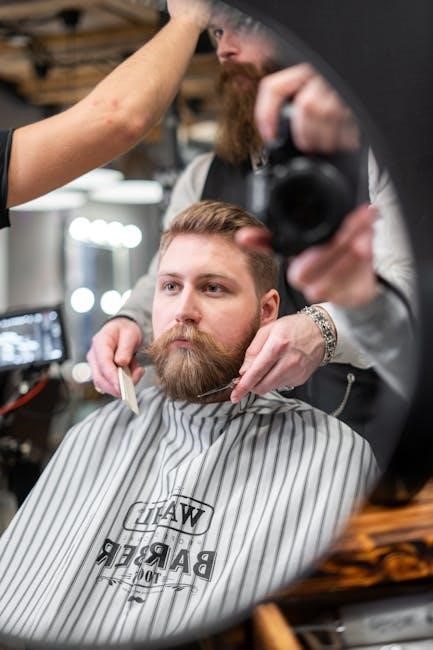
Remember, subtle adjustments can make a significant difference. Take your time and prioritize precision over speed for optimal results.

Toca Life World & Creativity (Related Concept ⎻ Playful Design)
Toca Life World fosters imagination through digital play, mirroring the creative self-expression found in personalized grooming, like using a beard guide.
Toca Life World: A Digital Playground
Toca Life World presents a captivating virtual realm where children can freely explore, create, and role-play within a vibrant and ever-expanding universe. This digital playground empowers young minds to construct their own narratives and environments, fostering imagination and storytelling skills. Much like a beard guide tool assists in shaping a desired aesthetic, Toca Life World provides the tools for self-expression and design.
The game’s intuitive drag-and-drop interface allows for effortless customization, enabling players to populate locations with unique characters and objects. It’s a safe and engaging space where creativity knows no bounds, mirroring the personal touch individuals bring to their grooming routines with tools like beard shapers.
Unblocked Access to Toca Boca World
Accessing Toca Boca World directly within a web browser offers convenient, unrestricted gameplay for children, eliminating download barriers at school, work, or home. This ease of access parallels the simplicity of using a beard guide tool – readily available to achieve a desired style. Just as a quick trim can boost confidence, immediate access to creative outlets is invaluable.
The ability to play unblocked fosters spontaneous creativity and allows for shared experiences. This mirrors the social aspect of beard styling, where individuals often seek advice or inspiration. Both offer a readily available means of self-expression and enjoyment, promoting positive engagement.
Character Creation in Toca Life World
Toca Life World’s extensive character customization options – allowing players to design unique avatars – resonate with the personalization offered by beard styling. Just as one crafts a digital persona, a beard shapes a physical identity. Both processes involve deliberate choices to reflect individual preferences and aesthetics.
The freedom to experiment with appearances in the game parallels trying different beard styles to find the perfect fit. This exploration fosters self-expression and confidence. Both activities empower individuals to curate their image, whether virtual or real, and embrace their unique style.