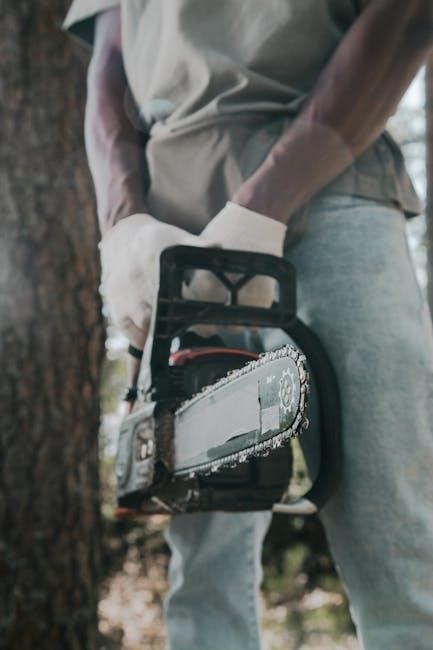
Echo CS-400 Chainsaw Manual: A Comprehensive Guide
This manual provides detailed instructions for the Echo CS-400 chainsaw, covering assembly, operation, parts diagrams, and essential maintenance procedures for optimal performance.
Explore exploded views, parts lists, and troubleshooting guides to ensure your chainsaw remains in peak condition, maximizing its lifespan and efficiency.
The Echo CS-400 chainsaw is a powerful and reliable tool designed for both professional and homeowner use. This manual serves as a comprehensive guide to understanding, operating, and maintaining your chainsaw, ensuring safe and efficient performance. Manufactured by Echo, a renowned name in outdoor power equipment, the CS-400 boasts a robust engine and user-friendly features.
This particular model, identified by serial numbers ranging from C08111001001 to C08111999999, is known for its excellent power-to-weight ratio, making it suitable for a variety of cutting tasks. Whether you’re felling trees, pruning branches, or processing firewood, the CS-400 delivers consistent performance.
Within this manual, you’ll find detailed parts diagrams, assembly instructions, and troubleshooting tips. Proper understanding of these instructions is crucial for maximizing the lifespan of your chainsaw and preventing potential hazards. Always prioritize safety and adhere to the precautions outlined in the dedicated safety section.
Safety Precautions
Operating a chainsaw like the Echo CS-400 involves inherent risks. Prioritize safety by always wearing appropriate personal protective equipment (PPE), including a helmet, eye protection, hearing protection, gloves, and chainsaw chaps. Never operate the chainsaw with one hand, and maintain a firm grip with both hands at all times.
Before each use, inspect the chainsaw for any damage or loose parts. Ensure the chain brake is functioning correctly and that the chain is properly sharpened and tensioned. Be aware of your surroundings and maintain a safe distance from bystanders. Avoid cutting above shoulder height.
Always shut off the engine before refueling, making adjustments, or performing maintenance. Never modify the chainsaw in any way. Read and understand this entire manual before operating the CS-400. Ignoring these precautions could result in serious injury.
Understanding the Chainsaw Components
The Echo CS-400 consists of several key components crucial for operation. The engine provides power, while the fuel tank and oil tank supply necessary fluids. The chain and bar assembly performs the cutting, requiring regular maintenance for optimal performance.
The carburetor mixes air and fuel, impacting engine efficiency. The spark plug ignites the mixture, initiating combustion. The chain brake is a vital safety feature, stopping the chain in emergencies. Familiarize yourself with the location and function of each part.
Understanding the metering diaphragm and shaft-choke (Part Numbers P003000150, 12314203930, 12313002960) is essential for carburetor adjustments. Proper knowledge of these components aids in troubleshooting and maintaining your Echo chainsaw effectively.

Assembly and Initial Setup
Proper assembly and setup are vital for safe and efficient operation of your Echo CS-400. Verify all parts are present using the included list.
Unpacking and Parts List Verification
Upon receiving your Echo CS-400 Chainsaw, carefully inspect the packaging for any signs of damage incurred during shipping. Once the box is opened, lay out all components and meticulously compare them against the provided parts list included within the manual. This crucial step ensures that no components are missing before proceeding with assembly.
The standard package should contain the chainsaw itself, a bar cover, a combination wrench (T-wrench), a sample of ECHO Power Blend X 2-stroke oil, and this comprehensive instruction manual. Additionally, you should find the warranty registration card. If any items are absent or appear damaged, immediately contact ECHO support for assistance and replacement parts. Do not attempt to assemble or operate the chainsaw with missing or damaged components, as this could compromise safety and performance.
Retain the packaging materials for potential future transport or warranty claims. A thorough verification now will save you time and frustration later.
Installing the Chain and Bar
Before installing the chain and bar on your Echo CS-400, ensure the chainsaw is switched off and the spark plug is disconnected for safety. Loosen the bar nuts, then carefully slide the bar onto the chainsaw’s mounting studs, ensuring the drive links of the chain are facing in the correct direction – typically towards the engine.
Place the chain around the bar, fitting the drive links into the bar’s groove. Adjust the chain tension by loosening the bar nuts and using the tensioning screw. The chain should be snug but able to be pulled around the bar by hand. Proper tension is vital for safe and efficient cutting.
Once the correct tension is achieved, firmly tighten the bar nuts. Regularly check and adjust chain tension during use, as it can loosen with operation. Always refer to the manual for detailed diagrams and specific torque specifications.
Fueling and Oil Mixing
The Echo CS-400 requires a precise fuel mixture of gasoline and 2-stroke oil for optimal performance and longevity. Use only fresh, high-quality unleaded gasoline with a minimum octane rating of 87. Echo recommends their Power Blend X 2-stroke oil, or an equivalent high-quality oil meeting ISO-L-EGD specifications.
The correct fuel-to-oil ratio is crucial; typically, this is 50:1 (50 parts gasoline to 1 part oil). Always pre-mix the fuel and oil in a clean, approved container. Ensure thorough mixing before pouring into the chainsaw’s fuel tank.
Never use straight gasoline, as this will damage the engine. Also, maintain a separate container specifically for the fuel/oil mixture. Always check the manual for the most up-to-date fuel recommendations and mixing ratios.

Operating Instructions
Proper operation of the Echo CS-400 involves safe starting procedures, effective cutting techniques, and understanding the chain brake for controlled, efficient use.
Starting the Chainsaw
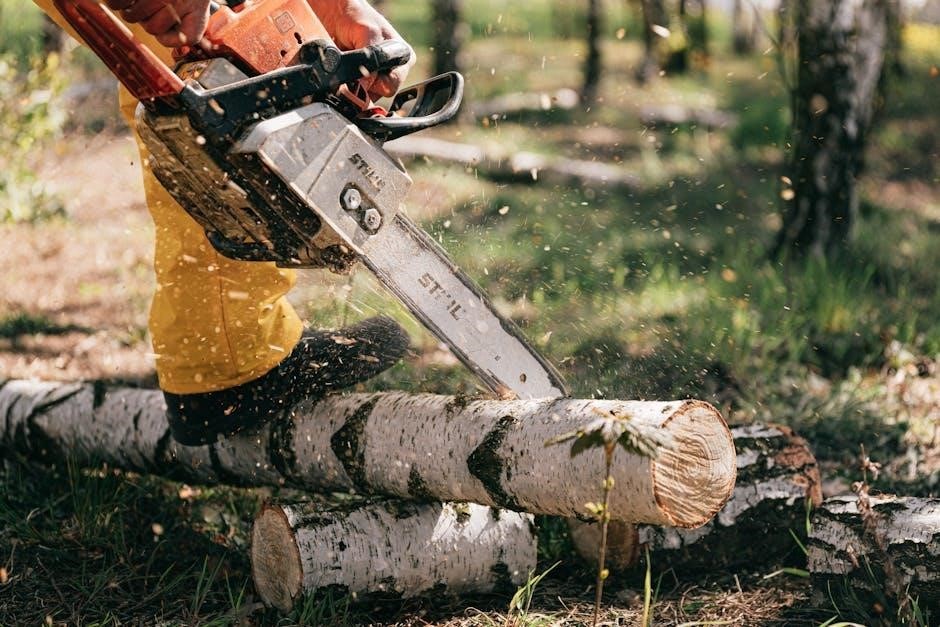
Before starting your Echo CS-400, ensure the chain brake is engaged and the chainsaw is placed on a firm, level surface. Verify proper fuel and oil levels, and confirm the spark plug cap is securely connected. To initiate the starting sequence, firmly press the primer bulb several times until fuel is visible within it – typically around 6-10 pumps.
Next, set the choke lever to the ‘start’ position. Grasp the starter grip firmly and pull the cord briskly and smoothly. Avoid pulling the cord to its maximum extent, and allow it to retract slowly. Repeat this pulling motion until the engine attempts to start, then gradually disengage the choke. Continue pulling until the engine runs consistently.
Once running, disengage the chain brake cautiously. Always maintain a secure grip and be aware of the chain’s movement; If the chainsaw fails to start after several attempts, consult the troubleshooting section of this manual for further assistance.
Proper Cutting Techniques
Safe and efficient cutting with your Echo CS-400 requires understanding proper techniques. Always maintain a firm grip with both hands, keeping your body positioned to the side of the cutting plane. Never overreach or cut above shoulder height. Utilize the lower portion of the bar for bucking (cutting through a fallen log) and the upper portion for felling (cutting down a tree).
When limbing (removing branches), be mindful of springback and avoid pinching the bar. Initiate cuts with a gentle pressure, allowing the chain to do the work. Avoid forcing the saw. For larger diameter trees, consider using a bore cut to prevent pinching. Always plan your escape route before felling a tree.
Regularly inspect the wood for hidden objects like nails or wire, which can damage the chain. Remember to maintain a safe distance from others and always wear appropriate safety gear.
Chain Brake Operation
The Echo CS-400 features a crucial chain brake for operator safety. This mechanism instantly stops the chain rotation, minimizing injury risk during kickback or emergencies. The chain brake is activated by pushing the hand guard forward with your left hand; It automatically engages upon kickback due to inertia.
Before each use, verify the chain brake functions correctly. Ensure it engages smoothly and holds the chain securely. Regularly inspect the brake band for wear and adjust as needed. A properly functioning chain brake is vital for safe operation.
Familiarize yourself with the brake’s location and operation before starting any cutting task. Never attempt to disable or modify the chain brake. It’s a primary safety feature designed to protect you during chainsaw use.
Maintenance and Servicing
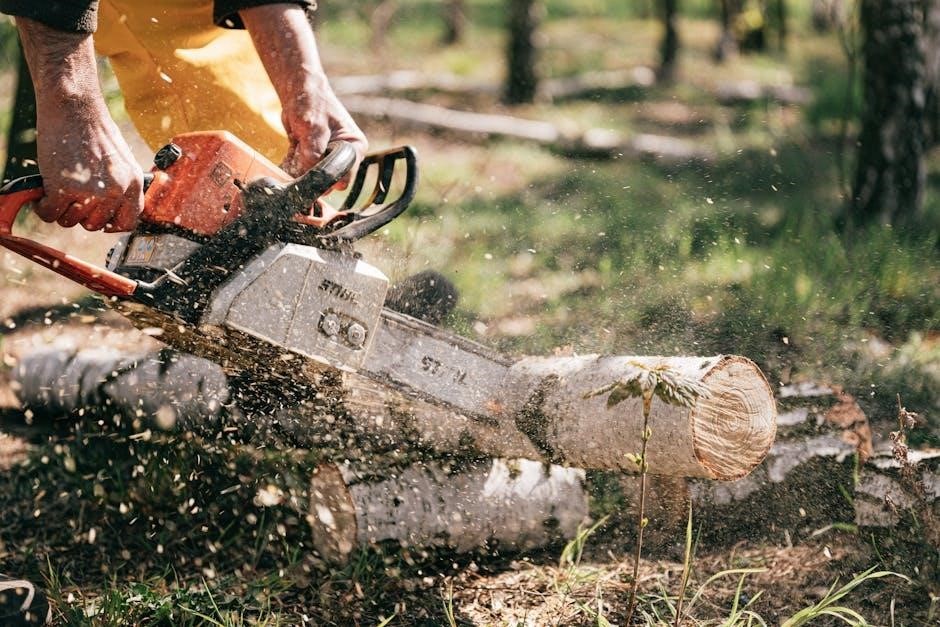
Regular maintenance ensures your Echo CS-400 operates safely and efficiently. This section details procedures for chain sharpening, bar maintenance, and air filter cleaning.
Chain Sharpening
Maintaining a sharp chain is crucial for efficient and safe cutting with your Echo CS-400 chainsaw. A dull chain requires more force, increasing the risk of kickback and operator fatigue. Regularly inspect the chain for wear and damage, and sharpen when necessary.
Use a round file of the correct size, guided by a sharpening file holder, to maintain the proper cutting angle and depth gauge. Ensure all cutters are filed to the same length for balanced performance. Avoid overheating the chain during sharpening, as this can alter its temper and reduce its lifespan.
Consider professional sharpening services if you lack experience or the appropriate tools. A properly sharpened chain significantly improves cutting speed, reduces strain on the engine, and enhances overall safety. Remember to always wear appropriate safety gear, including gloves and eye protection, when sharpening the chain.
Bar Maintenance
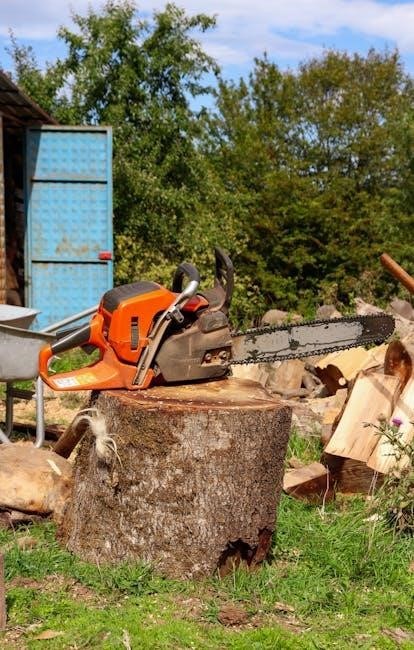
Proper bar maintenance is essential for the longevity and performance of your Echo CS-400 chainsaw. Regularly inspect the guide bar for wear, burrs, and damage. Clean the bar groove frequently to remove accumulated sawdust and debris, ensuring smooth chain travel. A clogged groove restricts oil flow, leading to increased friction and premature wear.
Periodically flip the bar over to distribute wear evenly. Check the bar rails for straightness and file down any burrs that may develop. Ensure the bar oiler is functioning correctly, providing adequate lubrication to the chain and bar during operation.
If the bar becomes severely worn or damaged, replace it with a new one. Using a damaged bar can lead to chain breakage, kickback, and potential injury. Maintaining the bar contributes to efficient cutting, reduced friction, and extended chainsaw life.
Air Filter Cleaning
Regular air filter cleaning is crucial for maintaining the optimal performance of your Echo CS-400 chainsaw. A dirty air filter restricts airflow to the carburetor, leading to reduced power and increased fuel consumption. Inspect the air filter before each use, and clean it whenever it appears dirty.
Remove the air filter cover and carefully remove the filter. For foam filters, wash it in warm, soapy water, rinse thoroughly, and allow it to dry completely. Once dry, lightly oil the filter with air filter oil. For nylon filters, tap it gently to remove loose debris, or use compressed air, blowing from the inside out.
Reinstall the clean filter and cover securely. A clean air filter ensures proper engine operation, prevents damage, and extends the life of your chainsaw.
Spark Plug Replacement
Replacing the spark plug on your Echo CS-400 chainsaw is a routine maintenance task that ensures reliable starting and efficient engine performance. A worn or fouled spark plug can cause starting difficulties, misfires, and reduced power. It’s recommended to replace the spark plug annually, or sooner if issues arise.
First, disconnect the spark plug wire. Use a spark plug wrench to carefully remove the old spark plug. Check the gap of the new spark plug using a feeler gauge, adjusting it to the specification listed in your owner’s manual. Install the new spark plug, tightening it to the recommended torque.
Reconnect the spark plug wire securely. A properly functioning spark plug is vital for optimal combustion and the longevity of your chainsaw engine.
Troubleshooting Common Issues
This section addresses frequent problems with the Echo CS-400, including starting failures, reduced cutting power, and excessive vibration, offering practical solutions.

Chainsaw Won’t Start
If your Echo CS-400 fails to start, several factors could be at play. First, verify the fuel tank contains a proper mixture of gasoline and 2-stroke oil, as specified in the manual. A stale or incorrect fuel mix is a common culprit.
Next, inspect the spark plug. Remove it and check for fouling – carbon buildup can prevent ignition. Clean or replace the spark plug as needed. Ensure the spark plug wire is securely connected. Also, confirm the choke is engaged correctly for a cold start, and disengaged for a warm start.
The air filter should be clean to allow adequate airflow. A clogged air filter restricts the engine’s ability to draw in air, hindering starting. Finally, check the fuel lines for any obstructions or kinks. If the issue persists, consult the detailed parts diagrams to inspect the carburetor for potential problems.
Poor Cutting Performance
If your Echo CS-400 exhibits poor cutting performance, a dull chain is the most likely cause. Sharpen the chain immediately, following the instructions in the manual, or have it professionally sharpened. Ensure the chain tension is correct; a loose chain will bounce and cut inefficiently, while a tight chain can bind.
Inspect the bar for wear and damage. A worn or bent bar can negatively impact cutting performance. Also, verify the chain is properly lubricated. Insufficient bar oil leads to increased friction and reduced cutting efficiency. Check the oiler for blockages.
A dirty air filter restricts airflow, reducing engine power. Clean or replace the air filter. Finally, examine the carburetor; a malfunctioning carburetor can cause an improper fuel mixture, leading to reduced power and poor cutting. Refer to the parts diagrams for carburetor inspection.
Excessive Vibration
Excessive vibration in your Echo CS-400 can indicate several issues. First, inspect the anti-vibration system. Check the rubber mounts connecting the engine to the handle; if damaged or worn, they must be replaced. A loose or damaged chain can also cause significant vibration, so ensure proper tension and sharpness.
Examine the bar for damage, as a bent or worn bar contributes to vibration. Verify all screws and bolts are securely tightened, particularly those connecting the handle and engine components. A loose component will amplify vibrations.
Inspect the chain for uneven wear or damage. An imbalanced chain will cause noticeable vibration. Finally, a malfunctioning carburetor can lead to an uneven engine run, resulting in increased vibration; consult the parts diagrams for troubleshooting.
Detailed Parts Diagrams
Explore comprehensive diagrams illustrating Echo CS-400 components, including carburetor views (various serial numbers) and specific parts like screws and shafts.
Carburetor Parts (S/N C08111001001-C08111019800)
This section details the carburetor components specifically for Echo CS-400 chainsaws with serial numbers ranging from C08111001001 to C08111019800. Accurate identification of these parts is crucial for effective repairs and maintenance. Key components include the carburetor itself, metering diaphragm, and various screws essential for adjustment and operation.
Part number 12313002960 designates a specific screw used within this carburetor assembly. The cover-metering diaphragm (part number 12314203930) protects the delicate diaphragm, ensuring proper fuel mixture. The shaft-choke (part number P003000150) controls the choke mechanism, vital for cold starting. Refer to the detailed diagrams for precise placement and assembly instructions. Maintaining these components guarantees optimal engine performance and longevity of your Echo CS-400 chainsaw.
Always use genuine Echo replacement parts to ensure compatibility and reliability. Improperly fitted parts can lead to reduced efficiency and potential engine damage.
Carburetor Parts (S/N C08111019801 onwards)
This section outlines the carburetor parts for Echo CS-400 chainsaws manufactured with serial numbers beginning at C08111019801. While sharing similarities with earlier models, specific components may differ, necessitating careful part identification during repairs or maintenance. Maintaining a correctly functioning carburetor is paramount for efficient engine operation and optimal cutting performance.
As with previous models, key parts include the carburetor body, metering diaphragm, and adjustment screws. Part number 12313002960 continues to identify a crucial screw within this assembly. The cover-metering diaphragm (part number 12314203930) remains essential for protecting the diaphragm, and the shaft-choke (part number P003000150) manages the choke function.
Consult the detailed exploded views to confirm correct part placement. Utilizing genuine Echo replacement parts is strongly recommended to uphold performance and prevent potential engine issues. Always prioritize accuracy when servicing the carburetor.
Metering Diaphragm and Shaft-Choke (Part Numbers)
The metering diaphragm and shaft-choke are critical components within the Echo CS-400 carburetor, directly influencing fuel delivery and engine responsiveness. Proper function of these parts ensures consistent performance and efficient combustion. Identifying the correct part numbers is vital for accurate repairs and replacements.
The shaft-choke, responsible for regulating air intake during cold starts, is designated by part number P003000150. This component must operate smoothly to facilitate easy starting. The metering diaphragm, crucial for precise fuel metering, requires careful inspection for cracks or damage;
When replacing these parts, always verify compatibility with your chainsaw’s serial number. Using incorrect parts can lead to diminished performance or engine malfunction. Refer to the detailed parts diagrams for correct placement and assembly. Genuine Echo parts are recommended for optimal reliability.
Screw Identification (Part Number: 12313002960)
This specific screw, identified by part number 12313002960, plays a crucial role in the carburetor assembly of the Echo CS-400 chainsaw. It’s typically used for adjusting mixture settings or securing carburetor components. Accurate identification and proper installation are essential for maintaining optimal engine performance.
During carburetor servicing, it’s vital to note the screw’s original position and the number of turns required for removal. This ensures accurate re-installation and prevents improper fuel-air mixture adjustments. Always use the correct screwdriver size to avoid stripping the screw head.
Referencing the parts diagrams will confirm the screw’s exact location within the carburetor. When replacing this screw, ensure the new component matches the original specifications. Using a damaged or incorrect screw can lead to fuel leaks or engine malfunctions.
Cover-Metering Diaphragm (Part Number: 12314203930)
The Cover-Metering Diaphragm, designated by part number 12314203930, is a critical component within the Echo CS-400 chainsaw’s carburetor. It works in conjunction with the metering diaphragm to regulate fuel flow, ensuring proper engine operation across varying speeds and loads. Maintaining its integrity is paramount for consistent performance.
Inspect this cover regularly for cracks, tears, or deterioration, as damage can lead to fuel leakage and a rich or lean fuel mixture. When replacing, ensure a proper seal is achieved to prevent air intake. Refer to the parts diagrams for correct placement and orientation.
Always use a new gasket when installing the cover, and tighten the screws to the manufacturer’s specified torque. A faulty diaphragm cover can cause starting difficulties, poor acceleration, and reduced engine power.
Shaft-Choke (Part Number: P003000150)
The Shaft-Choke, identified by part number P003000150, is an essential element of the Echo CS-400 chainsaw’s starting system. It controls the airflow to the carburetor during cold starts, enriching the fuel mixture for easier ignition. Proper function of this shaft is crucial for reliable starting, especially in colder conditions.
Inspect the shaft for any signs of damage, such as bending or cracking, which can impede its movement and affect choke operation. Ensure it moves freely within its housing. Refer to the parts diagrams to understand its precise location and assembly.
When replacing, carefully align the shaft and secure it properly. A malfunctioning choke shaft can result in difficult starting or an engine that won’t run smoothly. Regular maintenance ensures optimal performance.
Warranty and Support
Echo provides a warranty for the CS-400 chainsaw, and registration is recommended. For assistance, or to locate service centers, contact Echo Support directly.
Warranty Registration
Registering your Echo CS-400 chainsaw is a crucial step to validate and activate your warranty coverage. This process ensures you are eligible for repair or replacement services should any defects arise during the warranty period. The warranty registration card was included within the original packaging of your chainsaw, alongside the instruction manual and other essential components.
Completing and submitting this card promptly is highly recommended. Alternatively, many Echo dealers offer assistance with warranty registration. Online registration may also be available through the official Echo website, providing a convenient and efficient method to secure your warranty benefits. Keep a copy of your registration confirmation for your records, as proof of registration may be required when submitting a warranty claim.
Proper registration safeguards your investment and provides peace of mind, knowing your Echo CS-400 is protected against potential manufacturing defects.
Contacting Echo Support
Echo provides comprehensive customer support to assist with any questions or concerns regarding your CS-400 chainsaw. For immediate assistance, visit the official Echo website, where you’ll find a wealth of resources, including frequently asked questions, troubleshooting guides, and downloadable manuals. A dedicated support section allows you to submit inquiries directly to their customer service team.
Alternatively, you can reach Echo support via telephone during their business hours. Their knowledgeable representatives are equipped to address technical issues, warranty claims, and parts inquiries. When contacting support, have your chainsaw’s model number and serial number readily available to expedite the process.
Echo also maintains a network of authorized dealers who can provide local support and service. Utilizing these channels ensures you receive expert guidance and maintain the optimal performance of your chainsaw.